

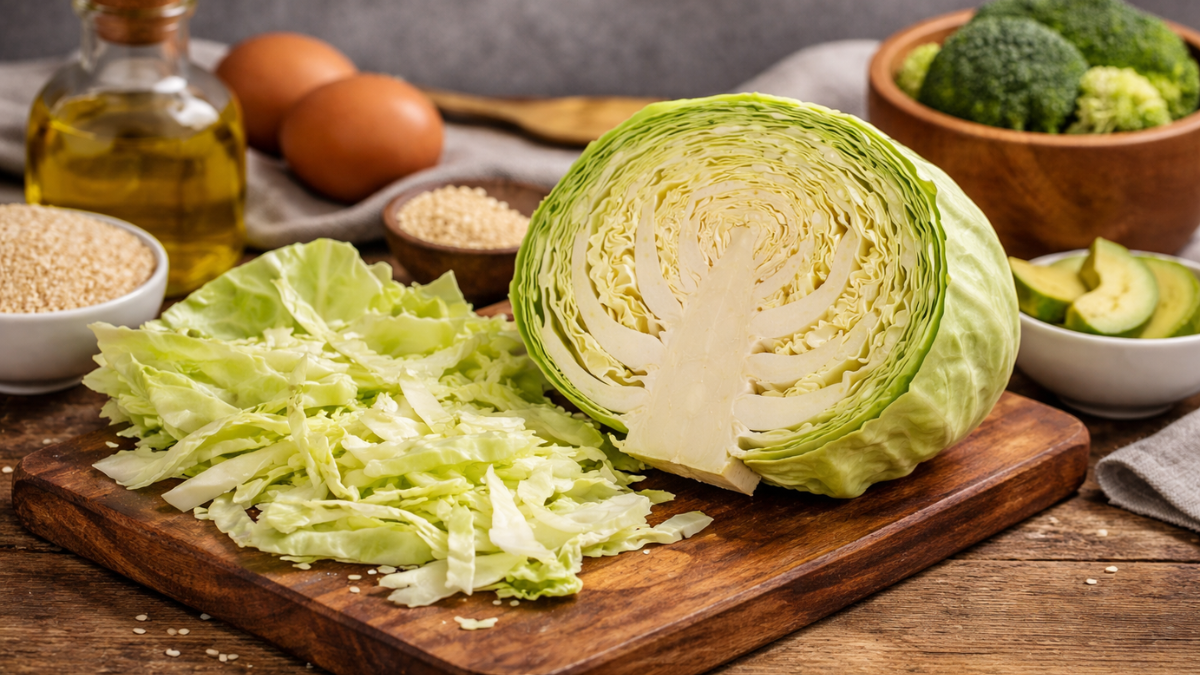
Is green cabbage low-carb? The short answer is yes—and it might be one of the most underrated ingredients you can add to your meals.
If you’ve ever walked past a head of green cabbage in the grocery store and wondered if it’s worth picking up, the answer is simpler than you might think. Green cabbage is naturally low in carbohydrates, high in fiber, and incredibly versatile in everyday cooking.
What makes it especially appealing is how easy it is to use. You don’t need complicated recipes or expensive ingredients. With green cabbage, you can create filling, satisfying meals that support low-carb eating without feeling restrictive.
And once you understand how it works nutritionally, it becomes even more valuable—not just as a side dish, but as a staple you can build meals around.
How Many Carbs Are in Green Cabbage?
When you’re trying to eat low carb, the numbers matter—but they don’t need to be complicated.
A cup of raw green cabbage contains roughly 5 to 6 grams of total carbohydrates, along with about 2 to 3 grams of fiber. That leaves you with around 3 to 4 grams of net carbs per cup, which is what most low-carb and keto plans focus on.
In practical terms, that’s very low.
What makes green cabbage especially helpful is that you can eat a generous portion without worrying about your carb intake climbing too quickly. Unlike many higher-carb vegetables, it adds volume to your plate while still fitting easily into a low-carb approach.
According to the USDA, green cabbage is low in carbohydrates and provides fiber along with essential nutrients.
It’s also worth noting that green cabbage isn’t just low in carbs—it brings along fiber, which helps slow digestion and keeps meals feeling more satisfying.
Is green cabbage keto-friendly?
Yes—green cabbage is absolutely keto-friendly.
Because it’s low in net carbs and naturally high in fiber, green cabbage fits easily into a ketogenic or low-carb way of eating. It gives you something many keto diets struggle with: volume and texture without adding unnecessary carbohydrates.
If you’ve ever followed a low-carb plan, you know how easy it is for meals to become heavy and repetitive. Green cabbage helps balance that out. It adds crunch, freshness, and variety, whether you’re sautéing it, tossing it into a stir fry, or using it as a base for simple bowls.
Another advantage of green cabbage is how well it pairs with higher-fat foods. It works alongside proteins and fats without competing with them, making meals feel more complete while still keeping carbs under control.
Why Green Cabbage Works So Well for Low-Carb Diets
Green cabbage isn’t just low in carbs—it’s one of those ingredients that quietly makes everything easier.
🟢 1. It Helps You Feel Full Without Adding Carbs
One of the biggest challenges with low-carb eating is staying satisfied. Green cabbage solves that naturally.
Because it’s high in fiber and water content, it adds volume to your meals without increasing calories or carbs. You can fill your plate, eat a generous portion, and still stay within your targets.
It’s simple, but it works.
🟢 2. It’s one of the most affordable healthy foods. Green cabbage is easy on your budget in a way most “healthy” foods aren’t.
While many low-carb ingredients can get expensive quickly, a single head of green cabbage can stretch across multiple meals. That makes it a practical choice if you’re trying to eat well without overspending.
🟢 3. It’s More Nutritious Than You Might Expect. Green cabbage may not have the reputation of trendier vegetables, but nutritionally, it holds its own.
It provides meaningful amounts of vitamin C, vitamin K, and important minerals—often outperforming more commonly used salad bases like lettuce .
In other words, you’re not just cutting carbs—you’re adding real nutritional value.
🟢 4. It Supports Digestion and Blood Sugar Balance
The fiber in green cabbage does more than help you feel full.
It can also support digestion and help slow how quickly sugar enters your bloodstream after a meal. That’s especially helpful if you’re trying to maintain steady energy levels or manage your overall carbohydrate intake .

Why Green Cabbage Works So Well for Low-Carb Diets
Green cabbage isn’t just low in carbs—it’s one of those ingredients that quietly makes everything easier.
🟢 1. It Helps You Feel Full Without Adding Carbs
One of the biggest challenges with low-carb eating is staying satisfied. Green cabbage solves that naturally.
Because it’s high in fiber and water content, it adds volume to your meals without increasing calories or carbs. You can fill your plate, eat a generous portion, and still stay within your targets.
It’s simple, but it works.
🟢 2. It’s One of the Most Affordable Healthy Foods
Green cabbage is easy on your budget in a way most “healthy” foods aren’t.
While many low-carb ingredients can get expensive quickly, a single head of green cabbage can stretch across multiple meals. That makes it a practical choice if you’re trying to eat well without overspending.
🟢 3. It’s More Nutritious Than You Might Expect
Green cabbage may not have the reputation of trendier vegetables, but nutritionally, it holds its own.
It provides meaningful amounts of vitamin C, vitamin K, and important minerals—often outperforming more commonly used salad bases like lettuce .
In other words, you’re not just cutting carbs—you’re adding real nutritional value.
🟢 4. It Supports Digestion and Blood Sugar Balance
The fiber in green cabbage does more than help you feel full.
It can also support digestion and help slow how quickly sugar enters your bloodstream after a meal. That’s especially helpful if you’re trying to maintain steady energy levels or manage your overall carbohydrate intake.
Fiber plays an important role in digestion and satiety, as explained by the Mayo Clinic.
Easy Ways to Use Green Cabbage
One of the best things about green cabbage is how easy it is to work into everyday meals.
You don’t need complicated recipes or special techniques. A few simple methods go a long way.
- Sautéed cabbage: Slice green cabbage thinly and cook it in a pan with a little oil, salt, and pepper. It softens quickly and pairs well with almost any protein.
- Stir-fry: Add chopped green cabbage to a quick stir-fry for extra volume and crunch without adding carbs.
- Simple cabbage bowls: Use green cabbage as a base instead of rice or pasta. Top it with meat, eggs, or whatever you already have on hand.
- Raw slaw: Shred green cabbage and toss it with a light dressing for a fresh, crisp side that’s naturally low in carbs.
What makes green cabbage stand out is its flexibility. You can keep it simple or build it into full meals, depending on what you need.
Green cabbage is low in carbs, high in fiber, and one of the most practical foods you can keep in your kitchen.
It’s affordable, easy to prepare, and versatile enough to fit into a wide range of meals. Whether you’re following a low-carb diet, trying to eat more fiber, or simply looking for a way to make meals more filling without spending more, green cabbage is a strong place to start.
Sometimes the most effective foods aren’t the most expensive or complicated—they’re the ones that quietly do their job well. Green cabbage is one of those foods.